


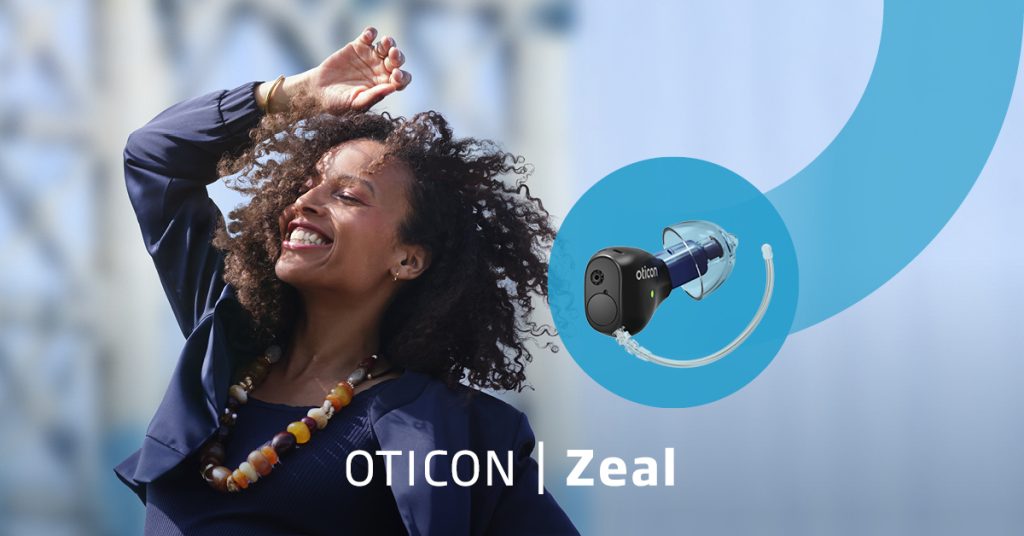
Hearing aid users in the United States need wait no longer: Oticon has launched its Auracast-enabled Zeal on the other side of the pond.
While the company unveiled the hearing aid at EUHA in Nuremberg last autumn, until now it has been European users who have benefited from the technology, which includes Google Fast Pair.
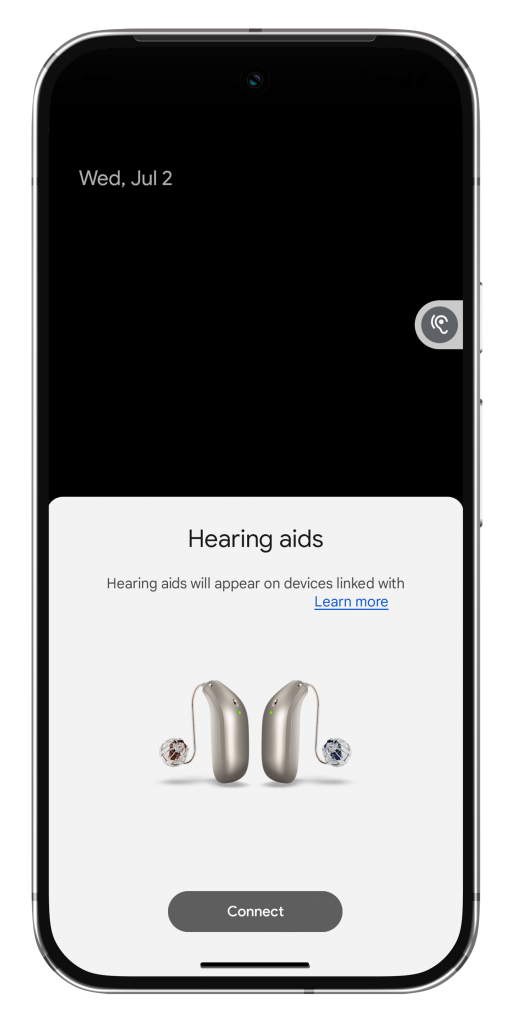
This technology uses Bluetooth LE Audio to connect devices quickly by bringing the two items close together.
Google says this can include headphones, car kits, mice and keyboards … and with Oticon’s launch, hearing aids as well.
A notification pops up on the device during the initial pairing process. These settings are stored on the device so that the next time the two items are in proximity, they reconnect. It can also display battery charge on the Bluetooth device, use a personalised connection name, and connect even when no phone network is available.
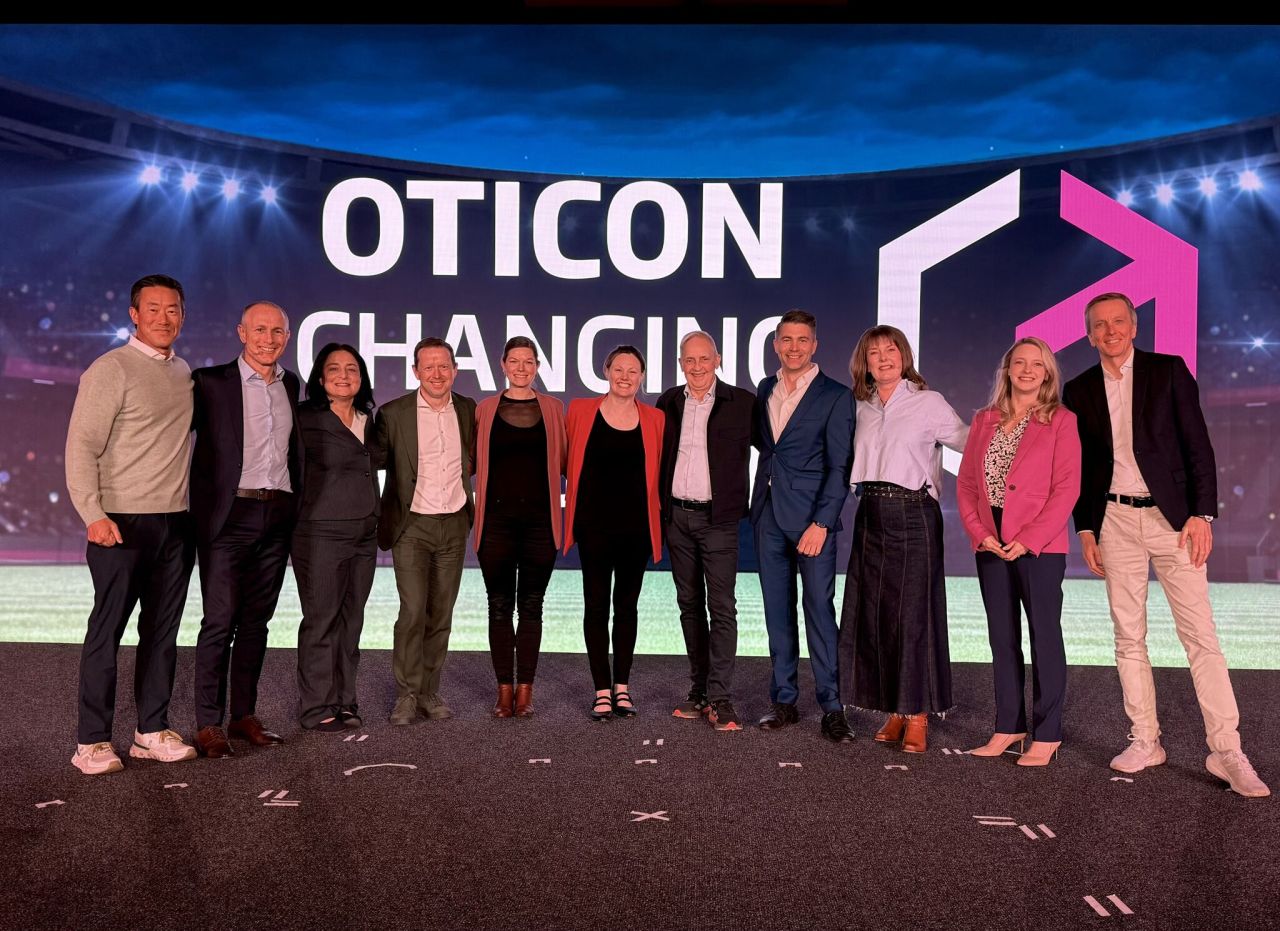
Last weekend, more than 700 audiologists and hearing care professionals attended the special launch event in Phoenix, Arizona. Called Changing the Game, it was an opportunity for professionals to get hands-on experience with the hearing aids and learn more about their features.
The Oticon Zeal is an in-the-ear hearing aid unlike any other on the market, and the company says it can be fitted in one visit. This means clients can have a hearing test and then try the aids, reducing the time needed to find the optimal sound balance.
The aid falls into a new hearing aid category: NXT In-the-Ear, which it says will be a game-changer by combining power and functionality.
Oticon says it uses encapsulation during manufacturing, similar to pacemaker manufacturing.
The company states that this indicates the product is robust and moisture-resistant, with its internal components protected and no risk of battery corrosion. The aid’s circuitry utilises Oticon BrainHearing AI technology, which, according to the company, functions effectively in all environments. This delivers improved speech clarity and noise suppression. The AI sound-processing technology provides up to 12 dB of noise suppression and up to 6 dB of AI-driven speech clarity enhancement.
The Oticon Zeal features a triple-function antenna that allows the aid to be placed deep in the ear canal while also serving as a pull-out string, ensuring a close fit with good retention.
Battery life: Oticon says it lasts a whole day. Charging for 15 minutes provides four hours of use, 30 minutes gives eight hours, and a full charge gives 20 hours. That’s impressive for a small device.
And the Oticon Intent miniBTE R now has Auracast. It has two fitting levels (85 and 105) to provide greater flexibility when audiologists fit the aids in a patient. It utilises Oticon’s second-generation AI and sensor-driven BrainHearing technology, which the company claims can alleviate listening fatigue and deliver exceptional speech clarity across various listening environments, thanks to its 4D sensors.
These sensors can respond to the user’s needs in real time, whether by tuning in to a conversation, head or body movements, or the room’s acoustics.
Using its MoreSound Intelligence 3.0 technology, the company says that Oticon Intent miniBTE R users will experience a 31% reduction in sustained listening effort when following speech in a very complex listening environment and a 40% reduction in listening stress in challenging sound environments compared to the previous iteration of the technology.
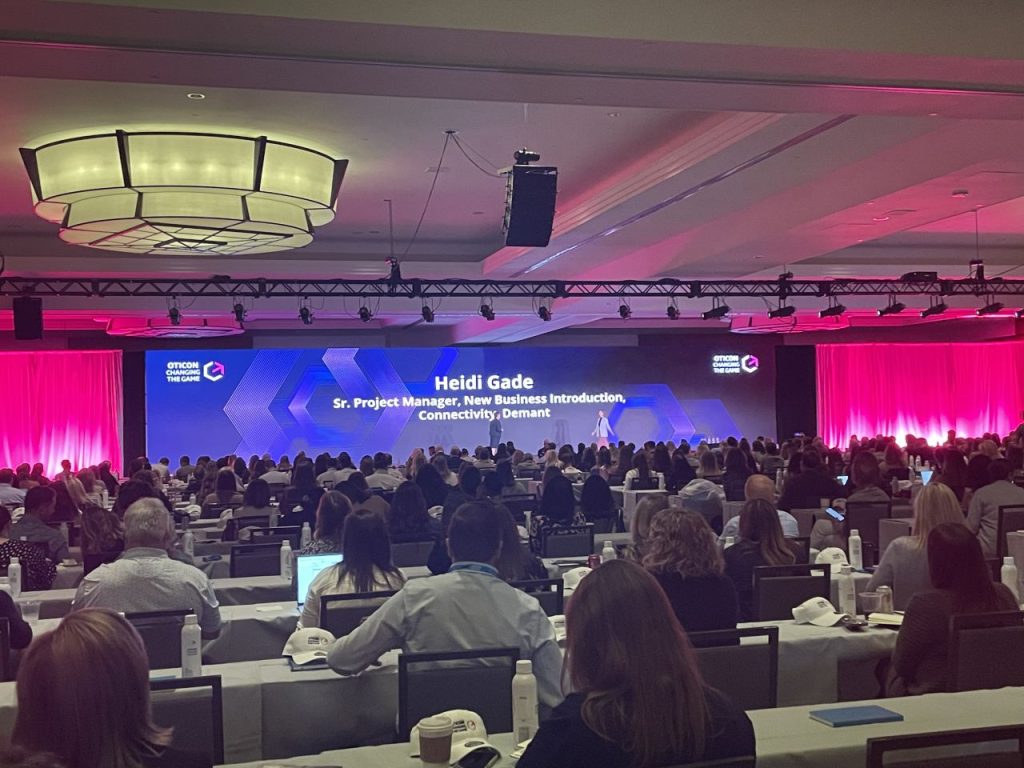
Oticon’s new connectivity: Auracast and Google Fast Pair
The presentation at Changing The Game was given by Dr Virginia Ramachandran, Oticon’s Vice President Audiology, and Heidi Gade, the senior project manager for Connectivity at the company.
“As an audiologist, connectivity isn’t really what we signed up for. But it’s become so important to patients. They fully expect it to be available in any device that is in or on their ears,” Dr Ramachandran said. “When it comes to connectivity, it only works if the usability is good, and it can’t create compromises for the audiology that we need to support patients.”
Oticon has now deployed Auracast. This enables low-energy, stable multi-device streaming, meeting the needs of modern consumers.
“LE Audio is not just an upgrade – it’s a foundation for the next generation of hearing technology,” said Heidi, adding that Oticon has been working with the Bluetooth Special Interest Group for the past decade, alongside the likes of Samsung, Google, and Apple: “Our shared goal is a frictionless experience for people who use hearing aids.”
That includes Fast Pair technology, which enables Oticon Zeal and Oticon Intent to quickly connect to a mobile device. Tap to pair; devices stay synced across a Google account, which will be appreciated as users upgrade phones or switch devices.
“With one simple tap, pairing happens – skipping all the tech gymnastics and allowing you to focus on delivering great care,” Heidi said.
Bluetooth LE Audio technology enables Oticon Zeal and Intent hearing aid users to connect directly with compatible Windows 11 computers. An adapter can be plugged into non-LE Audio computers, or a ConnectClip can be used to provide the same functionality.
And, of course, there is Auracast.
“We’ve been very excited for this because it can increase accessibility so easily for people with hearing loss,” Dr Ramachandran said.
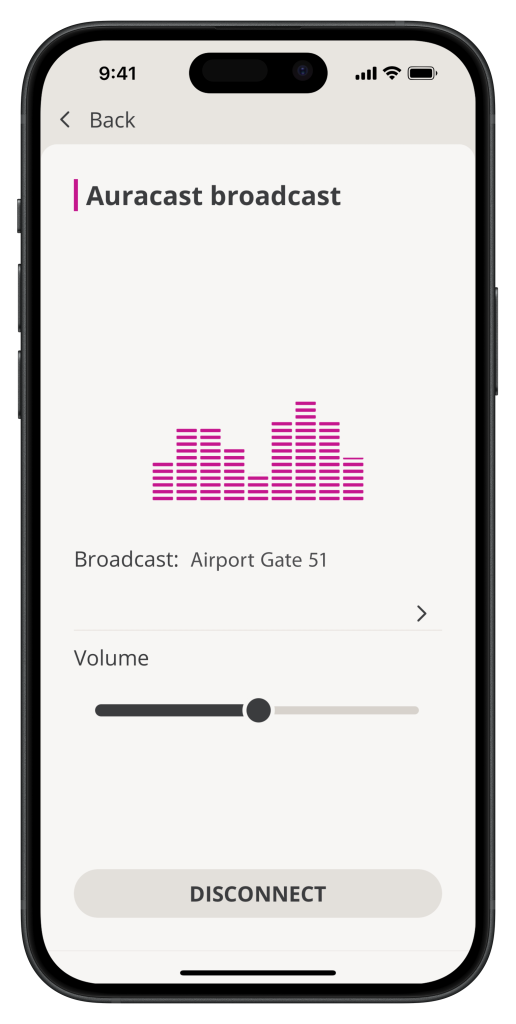
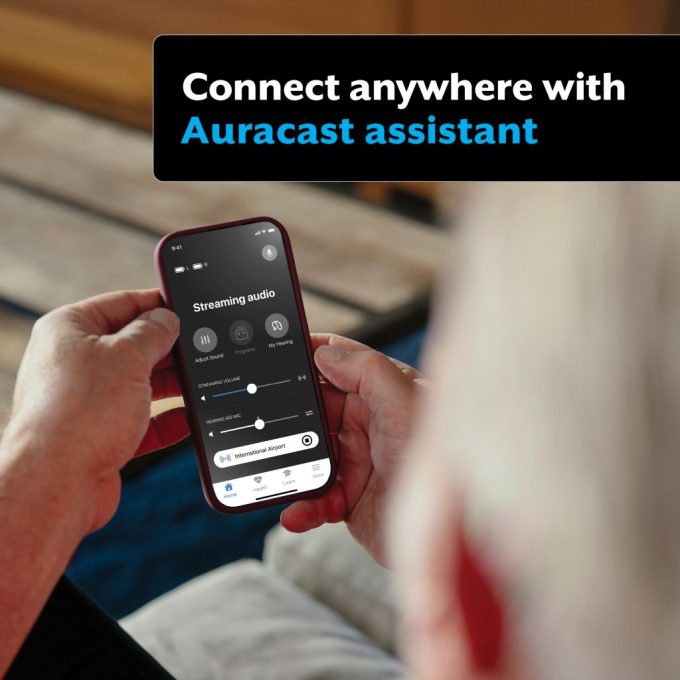
Oticon has built an Auracast Assistant into its Oticon Companion app, ensuring iPhone users can access the standard even though Apple has not yet adopted it. It also means Android users with non-Auracast-enabled devices can tune in to an Auracast.







Leave a comment